Trading Order Types & Execution: Complete Guide
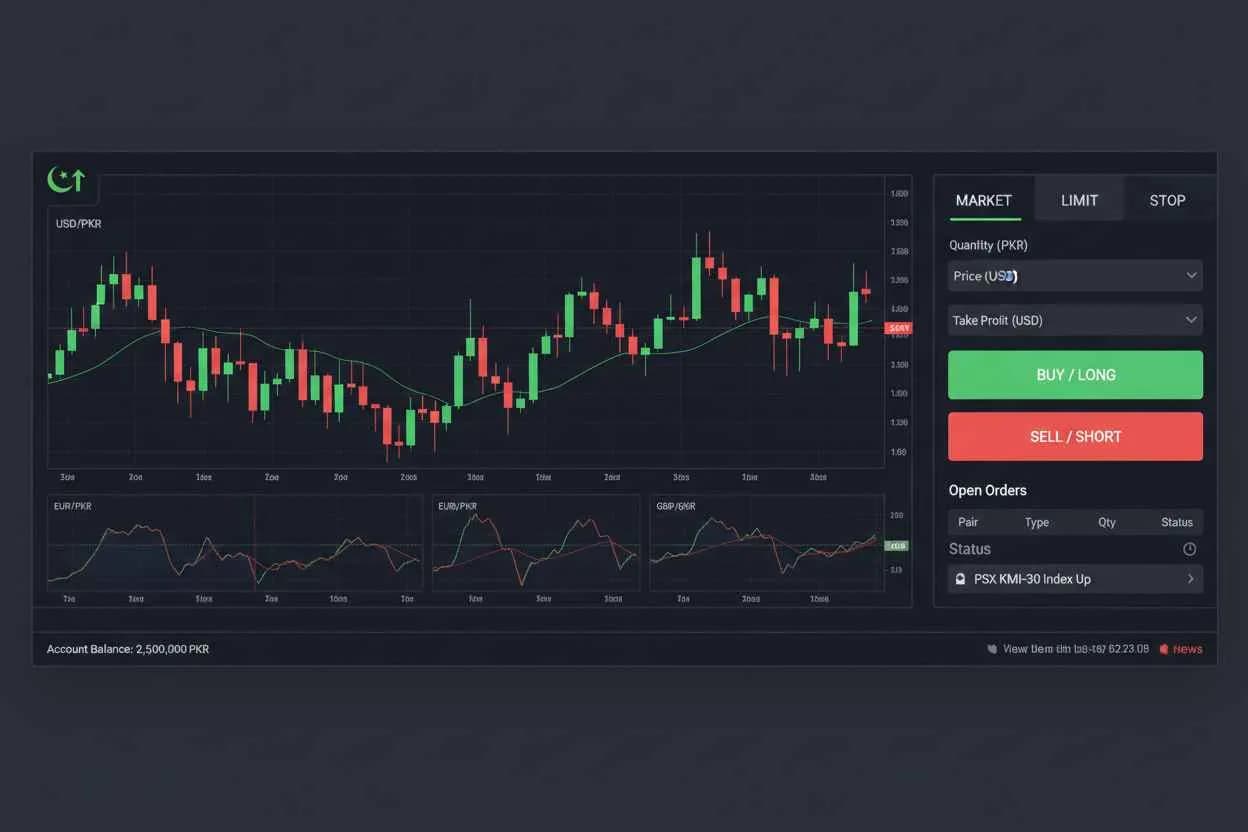
Trading order types determine how and when an instruction to buy or sell reaches the market. A trader may want to enter immediately at the best available price, wait for a lower price before buying, enter only after the market rises through a particular level, or automatically exit when a position reaches a predefined price. Each situation requires a different type of order. Choosing the wrong order can result in an unexpected entry price, a missed trade or more risk than intended. Execution also matters because the price visible on a screen is not always guaranteed to be the exact price received. Liquidity, volatility, spreads, trading volume and connection speed can influence how an order is filled. Understanding trading order types helps traders control the mechanics of a position before considering whether the underlying market view is correct.
Medatiq supports order placement through the MetaTrader 5 platform, where traders can access supported instruments available through its broader trading services.
What Is a Trading Order?
A trading order is an instruction to buy, sell, modify or close a financial-market position under specified conditions.
The simplest instruction is a market order: buy or sell at the best available market price. Other orders allow the trader to specify a price that must be reached before the instruction becomes eligible for execution.
The choice of order affects when the trader enters or exits. It does not determine whether the trade will eventually be profitable.
For example, two traders may both expect EUR/USD to rise. One may buy immediately using a market order, while the other places an order below the current price and waits for a pullback.
They have a similar market view but different execution plans.
Understanding the individual market order and limit order mechanics makes this distinction much clearer.
The Main Trading Order Types
Most trading situations can be understood through several core order categories:
Market orders seek immediate execution.
Limit orders seek execution at a specified price or better.
Stop orders generally become active after the market reaches a specified trigger level.
Stop-loss orders are commonly used to reduce exposure when a position moves unfavorably.
Take-profit orders can close a position when a target price is reached.
The exact terminology and available order types can vary by platform, instrument and account configuration.
Market Orders
A market order instructs the trading platform to execute a transaction at the best available price.
Suppose EUR/USD shows:
Bid: 1.1000
Ask: 1.1002
A trader who wants to buy immediately may submit a market buy order.
The expected price may be around the displayed ask, but the actual execution price can differ if the market moves between the time the order is submitted and filled.
That difference becomes more noticeable when prices are moving quickly.
When Market Orders Are Useful
A market order is appropriate when immediate participation matters more than obtaining one exact price.
For example, a trader may decide that a confirmed market move is more important than waiting for a pullback that may never occur.
The trade-off is less control over the precise execution price.
A market order answers:
"I want to enter now at the best available price."
It does not answer:
"I will only enter at exactly this price."
Limit Orders
A limit order allows a trader to specify the price at which they are willing to buy or sell.
A buy limit is normally placed below the current market price.
A sell limit is normally placed above the current market price.
Suppose EUR/USD is trading at 1.1050 but a trader believes 1.1000 would offer a better entry.
Instead of buying immediately, the trader could place a buy limit around 1.1000.
If the market falls to the required level and the order can be filled, the position may open.
If EUR/USD never reaches 1.1000, the order may remain unfilled.
That is the central trade-off with limit orders: better control over entry price, but no guarantee that the trade will happen.
Buy Limit Example
Imagine GBP/USD is trading at:
1.2800
A trader expects the broader trend to remain upward but believes the pair could temporarily fall before continuing higher.
The trader places a buy limit at:
1.2750
If GBP/USD declines to the required level, the order becomes eligible for execution according to the platform and market conditions.
If the pair rises directly from 1.2800 to 1.2900, the trader may miss the move entirely.
That missed opportunity is not necessarily an execution error. It is part of the decision to demand a lower entry price.
Sell Limit Example
A sell limit works in the opposite direction.
Suppose EUR/USD trades at:
1.1000
A trader expects resistance around 1.1050 and wants to sell only if the market first rises toward that level.
The trader may place a sell limit around:
1.1050
If the price reaches the required level and the order is filled, the trader enters a short position.
If EUR/USD declines without reaching 1.1050, no trade occurs.
Stop Orders
Stop entry orders are often used when a trader wants to enter after the market moves beyond a specified level.
Unlike a limit order, which commonly seeks a more favorable entry price, an entry stop is often used to confirm movement beyond a price threshold.
A buy stop is generally placed above the current market.
A sell stop is generally placed below the current market.
These orders are frequently associated with breakout trading.
Suppose EUR/USD is trading around 1.1000 and a trader believes a break above 1.1050 could indicate stronger upward momentum.
Instead of buying immediately, the trader could place a buy stop above 1.1050.
If the market reaches the trigger level, the order becomes eligible for execution.
Buy Stop Example
Assume gold is consolidating below a resistance level.
Current price:
2,500
Resistance:
2,515
A trader may decide that a move above 2,515 is required before considering a long position.
A buy stop could be placed above that level.
If gold never breaks resistance, the trader remains out of the market.
If the price rises sharply through the trigger, however, the execution price may be different from the exact stop level, particularly during volatile conditions.
Sell Stop Example
Suppose GBP/USD is trading around 1.2800 and repeatedly holding support near 1.2750.
A trader expects further weakness only if that support fails.
The trader may place a sell stop below 1.2750.
If the market falls through the level, the sell instruction becomes active.
This approach can be useful for breakout-style entries, but false breaks remain possible.
A price touching or moving through an important level does not guarantee that the move will continue.
Limit Order vs Stop Order
Limit and stop orders are easy to confuse because both involve setting a price in advance.
The difference is in where the order is normally positioned relative to the current market and what the trader expects to happen.
A limit order usually seeks a better entry price.
A stop entry order usually waits for confirmation through price movement.
If EUR/USD is trading at 1.1000:
Buy limit: commonly below 1.1000
Buy stop: commonly above 1.1000
For selling:
Sell limit: commonly above 1.1000
Sell stop: commonly below 1.1000
Neither type is inherently better. They solve different execution problems.
Stop-Loss Orders
A stop-loss is an instruction intended to close a position when the market moves sufficiently far against it.
Suppose a trader buys EUR/USD at:
1.1000
The trader decides that the original idea is invalid if EUR/USD falls below:
1.0950
A stop-loss can be positioned around the chosen exit area.
If the market reaches the stop level, the position becomes eligible for closure.
The intention is to limit further exposure rather than remain indefinitely in a losing trade.
A stop-loss is an important risk-management tool, but it does not guarantee an exact exit price.
Why Stop-Loss Execution Can Differ
Markets do not always move smoothly from one price to the next.
During fast conditions, prices can jump between available levels.
Suppose a stop-loss is set at 1.0950.
If the market moves rapidly from 1.0955 to 1.0945 without sufficient liquidity at the stop price, the actual execution may occur below 1.0950.
This is one reason traders need to understand execution rather than assuming that every order is guaranteed at the displayed number.
Position size remains important even when a stop-loss is used. The broader relationship between risk and trade size is covered in position sizing.
Take-Profit Orders
A take-profit order is used to close a position when the market reaches a chosen favorable price.
Suppose a trader buys EUR/USD at:
1.1000
The trader plans to exit if the pair reaches:
1.1100
A take-profit order can be placed around that target.
If the market reaches the required conditions and the order is executed, the position closes.
Take-profit orders can help traders follow a predefined plan instead of making every exit decision emotionally while the trade is active.
However, a fixed profit target can also cause a trader to exit before a larger move develops.
That is not automatically good or bad. It depends on the trading method.
Stop-Loss and Take-Profit Together
Many traders define both downside risk and an intended profit target when entering a trade.
For example:
Entry: 1.1000
Stop-loss: 1.0950
Take-profit: 1.1100
The planned risk is approximately 50 pips.
The planned target is approximately 100 pips.
This creates an intended reward-to-risk relationship of:
100 ÷ 50 = 2
That means the target distance is twice the stop distance.
The calculation does not imply that the trade has a high probability of success. It simply describes the planned relationship between potential gain and potential loss before trading costs and execution differences.
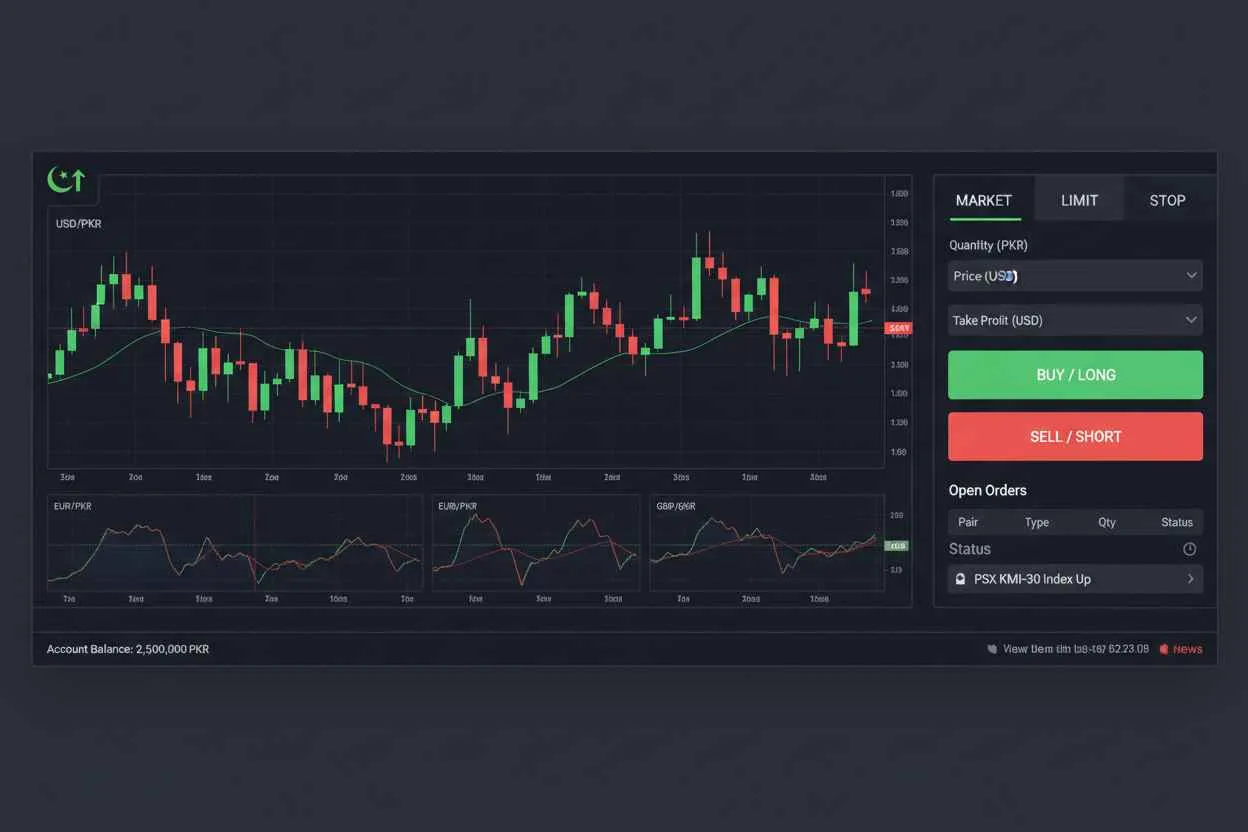
What Is a Pending Order?
A pending order is an instruction that waits for predefined conditions before becoming active.
Buy limits, sell limits, buy stops and sell stops are common examples.
Pending orders can be useful because traders do not need to watch the screen continuously waiting for one specific price.
This can be particularly practical for traders in Pakistan who may be following overseas sessions late in the day.
Someone in Peshawar or Mardan who has already defined an entry condition for a New York-session market does not necessarily need to manually click at the exact moment the price reaches that level.
However, leaving a pending order active without monitoring changing market conditions can create another problem: the original trade idea may become outdated before the price reaches the order.
Order Expiration
Some pending orders remain active until they are filled or manually cancelled.
Others can expire automatically.
A common distinction is between good-till-cancelled and time-limited orders.
The exact behavior is covered more closely in good-till-cancelled vs day orders.
Expiration matters when an entry is valid only during a particular market period.
Suppose a trader wants to trade a setup during the London session but does not want the same order triggered several hours later.
Using an appropriate expiration condition can prevent an outdated instruction from remaining active.
What Is Order Execution?
Order execution is the process through which a trading instruction is filled.
A trader may see a price on screen and submit an instruction, but several steps can occur between clicking and receiving the final fill.
During that interval, the market can move.
This is especially important during:
- Major economic releases
- Central-bank announcements
- Market openings
- Sudden geopolitical developments
- Periods of unusually low liquidity
- Sharp breakouts
Understanding bid price vs ask price also helps explain why the entry or exit level may differ from the chart price a trader was watching.
What Is Slippage?
Slippage occurs when an order is executed at a different price from the one expected.
Suppose a trader submits a market buy while the ask is:
1.1000
By the time execution occurs, the best available price is:
1.1003
The difference is three pips.
Slippage can also occasionally occur in a favorable direction.
It becomes particularly relevant when markets are moving quickly or available liquidity is limited.
A trader who relies on very small profit targets needs to pay close attention to execution because even modest slippage can materially change the result.
Spread and Execution
The spread is the difference between the bid and ask price.
A trader entering and immediately closing a position without any market movement would generally experience the effect of this price difference, along with any other applicable charges.
Understanding the bid-ask spread is therefore important when evaluating execution.
The effect becomes particularly noticeable for very short-term strategies.
If a trader aims to capture only a few pips, a two- or three-pip spread represents a significant portion of the intended move.
A longer-term position targeting hundreds of pips may view the same spread differently.
Fixed, Variable and Raw Spreads
Trading conditions can differ according to account structure and instrument.
Some pricing models use variable spreads that change with market conditions.
Other account structures may provide pricing closer to the underlying market spread while charging a separate commission.
The mechanics of a raw spread should therefore be understood together with commissions rather than treating the quoted spread as the entire trading cost.
When comparing execution, traders should consider the total transaction structure rather than focusing on one advertised number.
Trading Costs Matter
A position can move in the expected direction and still produce a smaller result than anticipated because trading costs reduce the net outcome.
Relevant costs may include spreads, commissions and overnight financing where applicable.
The broader mechanics are covered in trading costs explained.
For example, a strategy targeting very small market movements may be highly sensitive to spread and commission costs.
A trader targeting larger movements may be less sensitive to the same transaction cost, although costs still matter over many trades.
Market Execution and Instant Execution
Execution models can differ depending on the platform and account structure.
With market execution, an order generally seeks a fill at the best available market price when the instruction reaches execution.
Other execution arrangements may handle price changes differently.
The exact differences are explored in market execution vs instant execution.
The important practical point is that traders should understand what happens when the displayed price changes while an order is being processed.
Trading Latency
Latency is the delay between sending information and receiving a response.
In trading, it can refer to the time required for an order instruction or market data to travel between systems.
For many ordinary trading approaches, tiny differences in latency may have little practical importance. For strategies operating over very short periods, however, execution delay can matter more.
The effect of trading latency becomes particularly relevant when markets are moving rapidly.
For traders in Khyber Pakhtunkhwa, internet reliability can sometimes be just as practical a consideration as raw connection speed. Someone managing an open position from Peshawar, Abbottabad, Swat or Dera Ismail Khan should consider what happens if connectivity becomes unstable during a volatile period.
Using sensible position size and predefined risk controls becomes even more important when constant platform access cannot be assumed.
How to Read an Order Ticket
A trading order ticket typically displays several important fields.
These may include:
- Trading symbol
- Buy or sell direction
- Position volume
- Order type
- Entry price
- Stop-loss
- Take-profit
- Expiration
- Current bid and ask prices
Before confirming any order, the trader should verify every field.
The practical details of how to read a trading order ticket are particularly important because selecting the wrong volume can create far more risk than selecting an entry price a few pips away from the intended level.
Position Size Before Order Type
Choosing between a market or limit order matters, but it does not answer the most important risk question:
How large is the position?
Suppose two traders both buy EUR/USD at approximately 1.1000 with an intended stop 50 pips away.
One opens a small position.
The other opens a position ten times larger.
The technical setup and stop distance are identical, yet the monetary risk is dramatically different.
Understanding leverage and margin alongside position sizing helps prevent the order-entry screen from becoming a place where accidental overexposure occurs.
Orders During Economic News
Economic announcements can produce rapid price changes.
Inflation reports, employment releases and central-bank decisions may cause currency pairs to move sharply within seconds.
During these periods:
Spreads can widen.
Available liquidity can change.
Slippage can increase.
Prices can jump through expected levels.
Pending orders can trigger in rapidly changing conditions.
For traders in Pakistan, many important US releases occur during afternoon or evening hours in Pakistan Standard Time, while European announcements often arrive earlier in the day.
A trader in Peshawar, Mardan or Abbottabad who places a pending order before an economic release should know that being away from the screen does not prevent the order from triggering.
Orders During Market Gaps
Markets can sometimes reopen at a substantially different price from their previous trading level.
This is known as a gap.
Suppose a market closes around 1.1000 and reopens around 1.0950 after important weekend news.
A stop-loss positioned between those prices may not necessarily execute at the original requested level if no tradable prices were available there.
Gaps demonstrate why risk cannot be reduced to a single stop-loss number.
Position size, market conditions and potential discontinuities also matter.
Order Entry Mistakes
Some trading losses come from market analysis being wrong.
Others come from simple order-entry mistakes.
Common examples include entering the wrong volume, selecting buy instead of sell, using the wrong pending-order type, placing a decimal point incorrectly or forgetting that an old pending order remains active.
Reviewing trading order entry mistakes can help traders develop a simple confirmation routine before submitting an instruction.
A few seconds spent checking an order ticket can prevent mistakes that have nothing to do with market direction.
One-Click Trading
Some platforms allow orders to be placed quickly with minimal confirmation.
This can be useful when speed matters, but it also reduces the opportunity to review the instruction before execution.
The convenience of one-click trading should therefore be balanced against the risk of accidental entries.
Beginners may benefit from deliberately checking symbol, volume and direction before confirming an order, particularly while they are still learning platform mechanics.
Market Order or Limit Order: Which Is Better?
Neither is universally better.
A market order emphasizes certainty of participation, although not necessarily certainty of exact price.
A limit order emphasizes price control, but the trade may never be filled.
Consider a trader who believes EUR/USD is about to break sharply higher.
Waiting for a pullback using a buy limit may produce a better price if the market retraces.
But if EUR/USD rises immediately, the limit order might never execute.
A market order would participate immediately but may enter at a less favorable level.
The appropriate choice depends on the trading setup.
Stop Entry or Limit Entry?
The distinction comes down to what the trader wants price to do before entering.
A limit entry normally says:
"I want a better price."
A stop entry generally says:
"I want price to prove that it can move through this level first."
For a breakout setup, a stop order may fit the logic.
For a pullback setup, a limit order may make more sense.
Understanding the purpose of the order is more useful than memorizing which button to click.
Order Types for Forex Trading
Forex traders commonly use market, limit and stop orders depending on their entry logic.
Someone trading the forex market may use a market order after a signal has already occurred.
Another trader may wait for EUR/USD to return to a previously identified level using a limit order.
A breakout trader might use a stop entry above resistance.
The currency pair is the same, but the execution plan changes.
Order Types for Crypto Markets
Cryptocurrency instruments can experience sharp volatility, including outside the busiest traditional market hours.
A trader using Medatiq's supported cryptocurrency trading instruments should therefore understand how rapid price changes can affect market and stop orders.
Position sizing also deserves particular attention in volatile instruments. The mechanics of crypto position sizing can differ in practical importance from a slower-moving market even though the underlying risk principle remains the same.
Order Types for Gold and Commodities
Gold can move rapidly around inflation data, interest-rate expectations and major geopolitical developments.
A trader using commodities trading may therefore find that execution conditions during a major gold move differ considerably from quieter market periods.
Limit orders can help specify desired prices, while stop orders can be used for breakout-style entries.
Neither removes the possibility of slippage.
Order Types for Indices
Stock indices can react strongly around market opens, economic data and major corporate developments.
Traders accessing supported indices should understand that the liquidity and volatility seen during an active US session may differ from quieter periods.
For someone trading from Pakistan, major US index activity often occurs later in the local day, making advance order planning particularly useful for traders who cannot remain at the screen for the entire session.
Risk Management and Trading Orders
Order types are execution tools.
They do not replace trading risk management.
A carefully placed limit order can still produce a large loss if the position size is excessive.
A stop-loss can still result in more loss than expected during severe market gaps.
A good entry price cannot compensate for uncontrolled leverage.
Execution and risk management work together, but they solve different problems.
A Practical Order Planning Example
Suppose EUR/USD trades around:
1.1000
A trader believes the pair is in an upward trend but wants to buy only after a pullback.
The trader identifies:
Desired entry: 1.0970
Planned stop: 1.0920
Intended target: 1.1070
The entry is below the current market, so a buy limit may fit the intended setup.
The stop is 50 pips below the planned entry.
The target is 100 pips above it.
Before placing the order, the trader still needs to determine position size based on acceptable monetary risk.
If the trader simply enters the largest volume allowed by available margin, the carefully planned prices do not prevent excessive risk.
Trading Orders on MetaTrader 5
The MetaTrader 5 platform gives Medatiq users access to order-management functionality for supported instruments.
Before submitting an instruction, check the symbol carefully.
Then verify the position volume, order direction, order type and any attached stop-loss or take-profit levels.
If using a pending order, confirm both the trigger price and expiration conditions.
For traders in Peshawar, Swat, Kohat, Bannu or elsewhere in KPK who may be placing orders ahead of international sessions, it is also worth checking that the platform time and economic-calendar time have been interpreted correctly.
A timezone mistake can turn a well-planned order into one placed hours earlier or later than intended.
A Simple Pre-Order Check
Before confirming an order, ask:
Am I on the correct market?
A EUR/USD chart and GBP/USD chart can look similar at a glance.
Is the direction correct?
Verify whether the instruction says buy or sell.
Is the volume correct?
A decimal-place mistake in trade size can materially change financial exposure.
Is this the correct order type?
Do not use a stop order when the trading idea requires a limit order.
Are the entry, stop and target prices sensible?
Check that each sits on the intended side of the current market.
How much money could be lost?
Do not rely on the platform's margin requirement as a substitute for calculating risk.
These checks are simple, but they address many avoidable execution errors.
Common Questions About Trading Order Types
What is the simplest trading order type?
A market order is the simplest conceptually because it seeks immediate execution at the best available market price.
What is the difference between a market order and a limit order?
A market order prioritizes immediate participation. A limit order specifies a desired price or better but may never be filled.
What is the difference between a limit order and a stop order?
A limit order normally seeks entry at a more favorable price relative to the current market. A stop entry usually waits for the market to move through a specified trigger level.
What is a buy limit?
A buy limit is normally placed below the current market price. It seeks to buy if the market falls to the specified level.
What is a sell limit?
A sell limit is normally positioned above the current price. It seeks to sell if the market rises to that level.
What is a buy stop?
A buy stop is generally placed above the current price and becomes active when the market reaches the specified trigger.
What is a sell stop?
A sell stop is generally placed below the current price and is often used when a trader wants to enter after a downward break.
Does a market order guarantee the price shown on screen?
No. It seeks execution at the best available price, but the market can move before the order is filled.
Does a limit order guarantee execution?
No. The market may never reach the required price, or available liquidity may affect how an order is filled.
Does a stop-loss guarantee my maximum loss?
Not always. Price gaps, rapid volatility and liquidity conditions can cause execution away from the intended stop level.
What is slippage?
Slippage is the difference between the expected order price and the actual execution price.
Can slippage be positive?
Yes. An order can occasionally receive a better price than expected, although traders often focus on unfavorable slippage.
Should beginners use pending orders?
Pending orders can be useful when the trader understands exactly why the order is being placed and how it will behave. Beginners should learn the differences between limit and stop instructions before using them.
Can I place trading orders from Pakistan?
Eligible Medatiq users can manage supported market orders through the available trading platform according to their account conditions. The underlying mechanics of market, limit and stop orders are not changed by being in Pakistan.
Do order types work differently in Peshawar or other KPK cities?
The order mechanics are the same. Practical factors such as internet stability, local time and whether the trader can monitor the position during an international market session can affect how an order is managed.
Why does Pakistan time matter for pending orders?
Pending orders remain tied to market conditions even when the trader is away. Traders following London or New York activity from Pakistan should understand when those sessions and important economic releases occur in PKT.
Can I cancel a pending order?
Generally, an unfilled pending order can be cancelled subject to platform and market conditions. Once it has already triggered and become a position, closing it involves a different instruction.
Is a take-profit order guaranteed?
Like other orders, execution can depend on market conditions and available liquidity. Traders should not assume every instruction will always be filled at one exact price.
Which order type is best for breakout trading?
Stop entry orders are commonly associated with breakout setups because they wait for price to cross a specified level. That does not guarantee the breakout will continue.
Which order type is best for pullbacks?
Limit orders are commonly used when a trader wants to enter at a more favorable price during a retracement. The market may reverse before reaching the limit, so the trade is not guaranteed to occur.
Can the wrong order type increase risk?
Yes. Using a stop instead of a limit, entering the wrong volume or selecting the wrong direction can create unintended exposure. Order details should always be checked before confirmation.
Disclaimer: Market, limit, stop and other trading orders help control how positions are entered or exited, but they cannot remove market or execution risk. Fast price changes, gaps, liquidity conditions and leverage can cause losses that differ from a trader's original expectation. This material is educational rather than individualized investment, trading, financial, tax or legal advice, and Medatiq's available instruments, execution conditions, costs, margin rules and platform features may change.



Trade forex, gold, and indices with Medatiq Markets
Enjoy tight spreads and fast execution, built for market condition.