Best Indices Trading Broker in Punjab
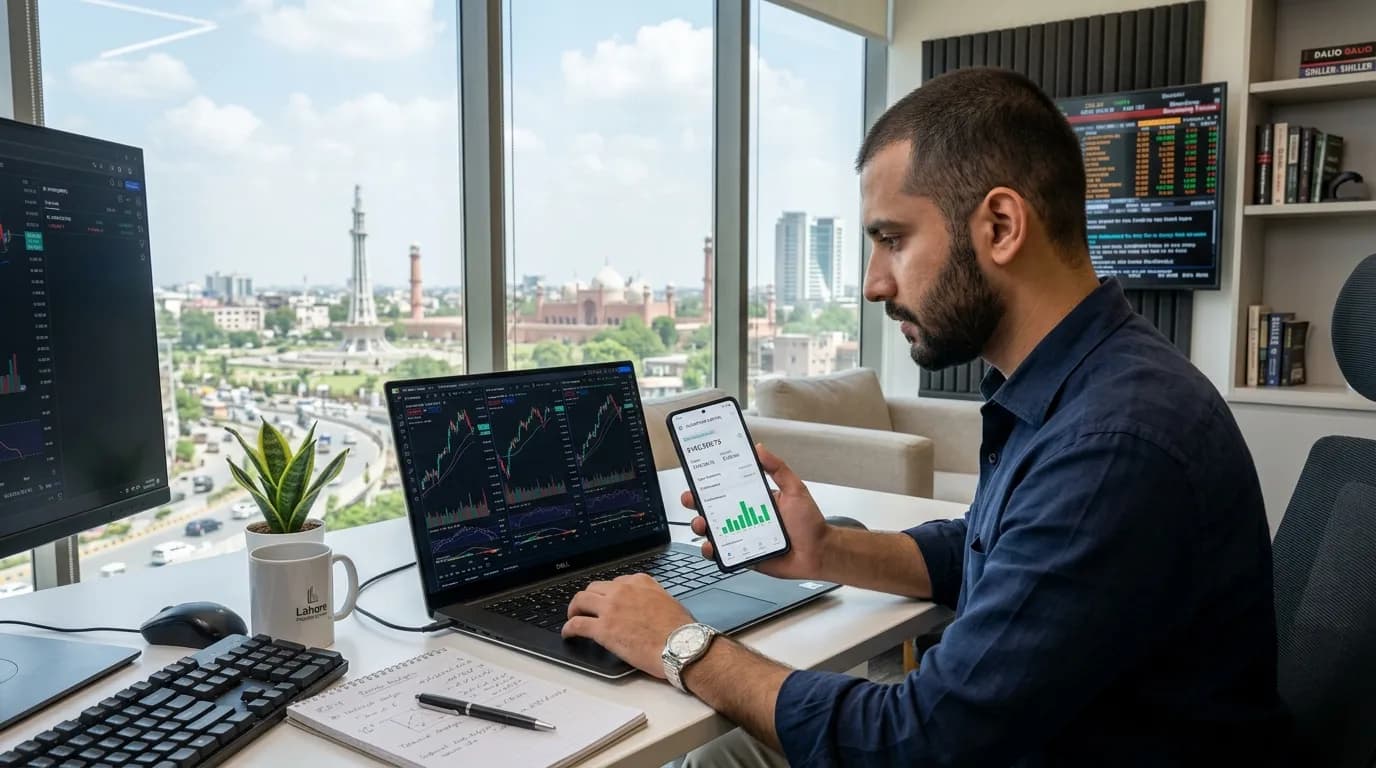
Choosing an indices trading broker in Punjab requires careful comparison of international market access, platform reliability, spreads, execution, margin requirements, mobile usability, and regulatory status.
The best indices trading broker in Punjab should provide access to international stock-market indices through a capable trading platform while making costs, execution, leverage, margin requirements, and account management understandable. Whether a trader is based in Lahore, Rawalpindi, Faisalabad, Multan, Gujranwala, Sialkot, or another Punjab city, choosing a broker requires more than comparing advertised spreads or the appearance of a mobile application. The underlying instrument, trading conditions, platform controls, and ability to manage financial exposure determine whether a service is genuinely suitable.
Medatiq Markets is one option to evaluate for traders interested in international index exposure. Its indices trading service identifies US30, US500, and USTEC among its supported markets, with access through MetaTrader 5. The company also provides dedicated Android and iOS customer applications for account management, allowing users to review account information and related activity from a smartphone. This creates a distinction between the account-management experience and the trading platform, which should be understood before opening a live position.
Punjab traders should also recognize that access to an international index does not necessarily mean direct ownership of the companies represented by that benchmark. Many online trading providers offer index-linked derivatives, which have different characteristics from conventional share ownership or exchange-traded investment products. Understanding the exact instrument is therefore essential when comparing brokers, particularly where margin or leverage can significantly increase losses.
How to Choose the Best Indices Trading Broker in Punjab
An indices trading broker should be evaluated against the markets and strategy the trader actually intends to use. Someone focusing on short-term movements in US30 may prioritize execution, spread behavior, and active-session liquidity, while a trader following US500 over several days may place greater emphasis on overnight financing, account conditions, and macroeconomic analysis. A trader interested in technology-sector movements may spend more time studying USTEC and its sensitivity to interest rates, large technology companies, and earnings announcements.
The type of account and product structure also matters. A broker may offer exposure to an index through a contract for difference or another derivative rather than through an investment fund holding the underlying shares. Such products can involve leverage, margin requirements, financing conditions, and broker-specific execution arrangements. These differences should be examined carefully because two applications displaying similar index prices may provide materially different trading experiences.
The platform should also make trade information easy to interpret. Before submitting an order, a trader needs to understand the position size, approximate market exposure, spread, required margin, stop-loss arrangement, and potential account loss if the market moves unfavorably. The better choice is a provider whose verified conditions support that level of transparency, rather than one selected solely because it advertises unusually high leverage.
US30, US500 and USTEC Trading in Punjab: Understanding the Differences
US30 Trading: Dow Jones Index Exposure and Market Drivers
US30 is generally associated with movements in the Dow Jones Industrial Average, a benchmark representing 30 major US companies. Its price-weighted construction means the influence of individual constituents differs from the market-capitalization weighting used by many other indices. Consequently, changes affecting particular large companies can influence US30 differently from US500 or USTEC, even when all three are moving in the same general direction.
For Punjab traders monitoring US30 during the American market session, company earnings, inflation releases, employment reports, interest-rate expectations, and changes in investor sentiment can all contribute to volatility. A strong movement in US30 should therefore be interpreted within its economic and market context rather than treated automatically as evidence that every part of the US equity market is behaving identically.
US500 Trading: S&P 500 Exposure, Earnings and Federal Reserve Expectations
US500 generally tracks price movements associated with the S&P 500, which represents a much larger group of major American companies. The index is commonly used as a benchmark for the wider US equity market, although its largest constituents can still influence performance substantially. Corporate earnings, economic growth expectations, inflation, Treasury yields, and monetary policy developments can all affect its direction.
The relationship between economic data and US500 is not always straightforward. Strong employment figures may support expectations for corporate revenue while also making investors reconsider how quickly interest rates might decline. Similarly, lower inflation can improve expectations for monetary easing, but the market's reaction depends on whether the announcement differs meaningfully from what investors anticipated.
For this reason, a platform that provides useful charts and order controls should be combined with an understanding of the events affecting the index. Technical signals can help organize the trading plan, but they cannot explain every sudden repricing caused by new economic information.
USTEC Trading: Nasdaq 100 Exposure and Technology-Sector Volatility
USTEC is commonly used for price exposure associated with the Nasdaq 100, a benchmark with substantial representation from technology and growth-oriented businesses. Its behavior can differ from US30 because expectations surrounding future corporate earnings, financing conditions, artificial-intelligence investment, semiconductor demand, and the performance of major technology companies can have a considerable influence.
Changes in interest-rate expectations are particularly relevant. Growth companies can be sensitive to shifts in bond yields because investors evaluate future earnings against prevailing financing and discount rates. A sudden rise in yields can place pressure on technology valuations, while falling yields may support them under some market conditions.
Punjab traders following USTEC should therefore understand why the benchmark can experience sharp movements around Federal Reserve announcements or major technology earnings. Its popularity does not make it inherently more predictable, and a leveraged position can magnify the financial effect of a movement that appears relatively ordinary on the underlying chart.
Medatiq Markets MT5 Platform for Indices Trading in Punjab
The MetaTrader 5 trading platform provides a dedicated environment for market charts, technical indicators, multiple timeframes, order entry, and position management. Traders can examine index price behavior, identify relevant market levels, and prepare trading instructions within the platform, subject to the instruments made available through the connected account.
For a Punjab trader who prefers detailed analysis on a computer, MT5 can provide substantially more room for charts and analytical tools than a smartphone display. A laptop or desktop may be particularly useful when comparing US30, US500, and USTEC simultaneously, reviewing the market structure across several timeframes, or preparing a position before a scheduled economic release.
The Medatiq Markets customer application serves a complementary function. Its current app descriptions focus on access to real and demo account information, account statistics, transaction history, and deposit or withdrawal management. Understanding this division is useful because installing the customer app should not be confused with learning the separate execution and charting environment.
A trader should become familiar with both parts of the workflow before relying on them during volatile market conditions. Knowing where the trading account is managed, how an index symbol is selected, how trade size is entered, and how an order is modified can prevent avoidable operational mistakes.
Indices Trading Spreads, Commissions and Financing Costs
Trading costs influence the performance of index strategies, especially when positions are opened and closed frequently. The spread represents the difference between the quoted buying and selling prices, while commissions or overnight financing may apply according to the instrument and account conditions. These costs should be examined together rather than treating one advertised spread as the complete expense of trading.
An intraday strategy targeting relatively small US30 movements can be sensitive to spread and execution differences because those costs may represent a meaningful proportion of the planned price movement. A longer-duration US500 position may be less sensitive to the initial spread but more affected by financing if the instrument involves applicable overnight charges. The actual conditions need to be checked for the account and instrument rather than inferred from general statements about a provider's pricing.
Traders should also recognize that spreads and execution conditions can change during periods of reduced liquidity or increased volatility. A price displayed during a quiet session may not be representative of conditions immediately after an important economic announcement. Reviewing realistic costs under the conditions in which the strategy is intended to operate gives a more useful basis for comparison.
MT5 Order Types and Execution Quality for US Indices
Index trading requires careful understanding of how instructions reach the market. A market order attempts to execute at an available price, while pending orders allow the trader to define conditions under which an entry should become eligible. Stop-loss and take-profit instructions can help structure exits, but they do not eliminate the possibility of execution differences during fast-moving markets.
The mechanics of trading order types and execution are particularly important for US indices because economic announcements can produce sharp price changes. A trader may identify a favorable setup and attempt to enter at a visible price, only to receive a different execution level if the market moves before the order is filled.
This difference is commonly called slippage. Its effect can be especially important for strategies using narrow stop distances or large leveraged positions, where a relatively small change in entry price can alter the planned financial risk.
A broker should therefore be assessed by the entire execution experience, including the available order controls, clarity of position information, and how the strategy performs under realistic market conditions. A smooth-looking interface alone does not establish superior execution.
Technical Analysis for US30, US500 and USTEC Trading
Technical analysis can help index traders identify trends, support and resistance levels, momentum changes, and possible areas for entering or exiting positions. The usefulness of these tools depends on how consistently they are applied and whether the trader understands the market conditions in which they tend to work.
The principles of technical analysis for trading can be applied to major indices through price structure, moving averages, indicators, and chart patterns. However, using more indicators does not necessarily improve accuracy. Several indicators may rely on similar underlying price data and can create the appearance of independent confirmation without providing genuinely different information.
A trader may identify an important resistance level on US500 and decide to enter only if price closes decisively above that area. Another may prefer to wait for a pullback toward a previously established support zone. These approaches reflect different trading plans, and neither can eliminate false signals.
The platform should support disciplined analysis rather than encourage constant switching between strategies. Consistency in market selection, timeframe, entry conditions, and risk controls is more useful than responding to every visual signal.
Index Day Trading Hours in Pakistan Standard Time
Punjab traders follow international markets according to Pakistan Standard Time, which affects how US equity-market activity fits into their daily schedules. Major American indices often experience changes in volatility and liquidity around the US cash-market opening, important economic releases, and the later stages of the trading session.
The structure of day trading becomes particularly relevant because an intraday strategy may depend on a defined period of market activity. A setup tested during the opening portion of the American session may behave differently in quieter trading conditions, even though the instrument and technical indicators are unchanged.
Pakistan does not follow the same daylight-saving schedule used in the United States. Consequently, the relationship between Pakistan Standard Time and the US market changes seasonally. Punjab traders should confirm the current market schedule and the trading hours available through their specific account rather than assuming that one permanent PKT opening time applies throughout the year.
A planned trading window can also help reduce unnecessary screen time. Instead of monitoring indices continuously, traders can focus on the sessions and market conditions that are relevant to their tested approach.
Index Trading Leverage and Margin Requirements in Punjab
Leverage is one of the most significant risks associated with index-linked derivatives. It allows traders to control exposure greater than the capital committed as margin, which can magnify both favorable and unfavorable price movements. A broker offering high maximum leverage should not automatically be ranked above one offering more conservative conditions.
Consider a hypothetical trading account containing $2,000 in equity. If the trader controls $20,000 of index exposure, a 2% adverse movement represents approximately $400 before spreads, financing, or execution differences. That loss equals 20% of the original account equity, even though the underlying index moved only 2%.
Increasing market exposure would make the same price movement even more consequential. The amount required to open a position should therefore not be confused with the total financial exposure created by that position.
A suitable platform should allow margin and open exposure to be understood before trading, while the user should select position size according to acceptable account risk rather than maximum available leverage.
Managing Correlated Risk Across US30, US500 and USTEC
Opening positions across several US indices can create more concentrated exposure than the trader initially realizes. Although US30, US500, and USTEC have different constituent structures and can diverge, all three can react to changes in US monetary policy, economic conditions, and investor sentiment.
Suppose a trader simultaneously opens large long positions in all three indices before a major Federal Reserve announcement. The positions may appear to represent three separate trading opportunities, but a broad decline in US equities could cause losses across the entire group. The combined account risk would therefore be substantially greater than the risk calculated on any one position.
A disciplined trader should evaluate total exposure before adding another position that depends on similar market conditions. Diversification requires more than opening multiple order tickets; it depends on understanding how those positions may behave together when the market changes.
Mobile Indices Trading for Punjab-Based Traders
Mobile access can be practical for traders who cannot remain at a desk throughout international market sessions. A phone allows account monitoring and, through supported trading applications, access to price charts and position controls when the user is travelling or managing other responsibilities.
The mobile experience still involves limitations. A small display can make multi-timeframe analysis difficult, while unstable internet connectivity can interfere with monitoring or order management during fast market conditions. A position does not stop carrying risk because the device disconnects or its battery becomes depleted.
Punjab traders should therefore treat mobile trading as part of a complete risk-management process. Position size, stop placement, market-event awareness, and predefined exit conditions should reduce dependence on uninterrupted manual intervention.
Regulatory Verification for Indices Brokers Serving Punjab Residents
Pakistan's financial regulatory environment applies to Punjab residents regardless of whether they access a trading application from Lahore, Rawalpindi, Faisalabad, or another city. The Securities and Exchange Commission of Pakistan has cautioned the public against unauthorized online trading and investment platforms, including services offering speculative financial products without appropriate local authorization.
A broker's international website, MT5 connection, professional branding, or app-store listing should not be treated as proof that it is authorized to provide a specific financial service in Pakistan. Traders should verify the legal entity, instrument structure, applicable jurisdiction, and current regulatory status before depositing money.
The same due-diligence standard applies to Medatiq Markets. Its indices service, MT5 access, and customer applications establish the nature of the advertised product ecosystem, but they do not independently establish Pakistani regulatory authorization. Eligibility and legal status should be checked through authoritative sources relevant to the intended activity.
Is Medatiq Markets a Suitable Indices Trading Broker for Punjab?
Medatiq Markets may be relevant to Punjab traders seeking supported US30, US500, and USTEC exposure through MT5 while keeping account information accessible through Android and iOS customer applications. Its multi-asset environment may also appeal to users following more than one category of financial market.
The decision should nevertheless depend on current account terms, instrument specifications, spreads, execution, margin, leverage, deposits, withdrawals, platform usability, and regulatory eligibility. A trader who understands the underlying market and can measure potential losses before entering a position is better prepared to evaluate the platform than someone choosing primarily through promotional claims.
Traders who need clarification about account procedures or supported functionality should use the company's contact and customer-support channels before making a funding decision. Written confirmation of important conditions can help prevent misunderstandings when real money is involved.
FAQs About Indices Trading Brokers in Punjab
What is the best indices trading broker in Punjab?
There is no single broker that is best for every Punjab trader. Available index instruments, platform functionality, spreads, execution conditions, leverage, margin requirements, funding procedures, withdrawals, support, and current regulatory eligibility should all be evaluated before choosing.
Does Medatiq Markets offer US30, US500 and USTEC trading?
Medatiq Markets currently identifies US30, US500, and USTEC in its indices trading service. Traders should confirm the current instrument specifications, account requirements, available trading hours, and applicable charges before opening a live position.
Can Punjab traders use MetaTrader 5 for international indices?
MT5 supports trading and analysis of instruments made available by a connected provider. The trader's location within Punjab does not change the underlying international benchmark, but account eligibility, local time, and access conditions still matter.
Is trading US500 the same as owning S&P 500 shares?
No. An index-linked derivative provides a form of price exposure and does not automatically create ownership of the constituent shares. The precise rights, obligations, leverage, and costs depend on the financial instrument offered.
Is USTEC riskier than US500?
USTEC can display different volatility characteristics because of its concentration in technology and growth-oriented companies. Risk also depends on leverage, position size, stop distance, and prevailing market conditions, so neither instrument should be considered automatically safer.
What costs matter most when trading indices?
Spreads, commissions where applicable, overnight financing, execution differences, and account-related fees can influence overall results. Their importance varies according to the instrument, holding period, and frequency of trading.
Can index positions be managed from a smartphone in Punjab?
Supported mobile trading applications allow market monitoring and position management, but traders should consider screen size, device reliability, internet connectivity, and the complexity of the strategy before relying primarily on a phone.
Does using MT5 prove that an indices broker is regulated in Pakistan?
No. MT5 is trading software, and access to it does not independently establish a provider's regulatory authorization. Pakistan residents should verify the broker and relevant financial activity through appropriate official sources.
Conclusion
The best indices trading broker in Punjab should combine appropriate international market access, capable trading tools, understandable costs, disciplined risk controls, practical account management, and transparent product conditions. Medatiq Markets offers US30, US500, and USTEC exposure through MT5 alongside Android and iOS customer applications, making it an option Punjab traders can evaluate carefully against their individual requirements.
Disclaimer: Index-linked trading products can experience substantial volatility, and leverage can magnify financial losses. Verify current product terms, account eligibility, and applicable Pakistan regulatory requirements before trading; this article is educational and not personalized financial advice.


Trade forex, gold, and indices with Medatiq Markets
Enjoy tight spreads and fast execution, built for market condition.